Kitchen Faucet Repair in Miami FL: Expert Plumbing Guide
Learn professional kitchen faucet repair in Miami, FL. Diagnose leaks, understand mineral buildup from hard water, and know when to fix or replace.


Diagnosing Kitchen Faucet Failures in Miami Homes
Kitchen faucet repair in Miami, FL requires a precise understanding of how local water conditions, intensive daily usage, and high-rise or single-family supply configurations interact with modern fixture engineering. When a kitchen faucet begins to leak around the base, drip persistently from the spout, or experience a dramatic loss of water pressure, the root cause typically stems from internal cartridge failure, mineral scaling, or worn-out O-rings. Skipping generic plumbing assumptions, diagnosing a kitchen faucet issue involves analyzing the specific physical mechanism of the valve assembly—whether it is a single-handle ceramic disc cartridge, a dual-handle compression valve, or a complex pull-down spray wand mechanism.
Establishing clear diagnostic boundaries is essential before picking up a wrench. A localized leak dripping directly into the under-sink cabinet usually points to supply line connections, a faulty diverter valve, or a degraded spray hose. However, if water is pooling behind the sink baseplate or tracking along the granite countertop, the issue may involve worn mounting hardware or a compromised deck seal. Distinguishing between a fixture-specific failure and a broader branch line pressure issue prevents unnecessary disassembly of perfectly functional hardware.
The Impact of Miami's Water Chemistry and Coastal Environment
South Florida presents unique environmental challenges that drastically shorten the operational lifespan of kitchen plumbing fixtures. Miami-Dade County water carries high levels of calcium carbonate and magnesium, creating hard water conditions that accelerate mineral scaling inside delicate faucet cartridges and aerators. Over time, these mineral crystals accumulate along ceramic discs and rubber seals, preventing valves from seating completely and resulting in stubborn drips.
Furthermore, Miami's high humidity and proximity to coastal salt air create an aggressive environment for metal components. In neighborhoods spanning from Brickell high-rises to coastal homes in Miami Beach, brass and chrome-plated fixtures are susceptible to galvanic corrosion and exterior pitting. When dissimilar metals—such as copper supply lines, brass shutoff valves, and stainless steel sink bodies—react in a humid, saline atmosphere, threads seize and mounting nuts fuse together, turning a routine cartridge swap into a delicate extraction process.
Another overlooked factor in high-rise condominiums across downtown Miami and Edgewater is dynamic water pressure fluctuations. High-rise buildings often utilize booster pumps and pressure-reducing valves (PRVs) to maintain adequate supply to upper floors. Sudden pressure spikes during off-peak hours can stress older faucet hoses, trigger premature weeping at connection points, and rupture internal flexible supply lines if they lack adequate burst-protection braiding.
Safe Homeowner Triage vs. Professional Boundaries
Before attempting any kitchen faucet intervention, homeowners must understand safe triage steps and recognize the hard boundaries where professional plumbing expertise becomes mandatory.
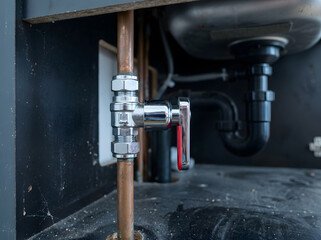
- Locate Angle Stops: Identify the hot and cold water shutoff valves beneath the sink. Turn them clockwise to isolate the faucet before beginning any work. Ensure these valves actually hold a complete seal; older multi-turn gate valves in older Miami homes frequently fail to shut off completely.
- Inspect Supply Lines: Check braided stainless steel or flexible polymer supply lines for signs of bulging, corrosion, or weeping at the crimped metal collars.
- Clean Aerators: Unscrew the faucet aerator and soak it in a mild descaling solution to clear trapped sediment and restore optimal laminar flow.
Explicit Warnings: Never force rusted mounting nuts under a cramped sink basin using excessive leverage, as this can crack porcelain under-mount sinks or twist thin-gauge stainless steel basins. Avoid using corrosive liquid drain or pipe cleaners anywhere near supply lines or faucet components. If an angle stop valve snaps off during shutoff attempts, be prepared to immediately shut off the main water supply to the property.
Repair vs. Replacement: Making the Right Decision
When addressing a malfunctioning kitchen faucet, property owners must evaluate whether to rebuild the existing fixture through targeted part replacement or invest in a completely new unit. Modern single-handle faucets rely on precision-machined ceramic cartridges that are often warrantied by manufacturers, making a cartridge swap an economical and sustainable repair. However, structural wear, stripped mounting threads, or chronic hose retractor failures often justify a full fixture upgrade.
Comparison of Faucet Intervention Options
| Issue Type | Probable Cause | Recommended Action |
|---|---|---|
| Continuous drip from spout | Worn ceramic cartridge or mineral scale on seats | Disassemble, clean scale, or replace internal cartridge |
| Leak under sink cabinet | Loose supply line, cracked spray hose, or faulty O-ring | Replace flexible line or tighten connection |
| Low flow from spray wand | Debris-clogged check valve or scaled aerator screen | Flush check valve, clean aerator, or replace spray head |
| Base wobbling on countertop | Corroded mounting nut or compressed deck gasket | Re-secure under-deck mounting hardware or replace gasket |
When planning a kitchen faucet repair or replacement in Miami-Dade County, practical pricing and logistical factors must be considered. High-rise properties often require building management coordination to shut down riser stacks for major repairs. Furthermore, tight under-sink configurations in custom quartz or granite countertops demand specialized basin wrenches and careful handling to prevent chipping costly stone surfaces.
Frequently Asked Questions
Why does my new kitchen faucet have low water pressure compared to the old one?
Modern kitchen faucets comply with strict federal and state flow-rate standards, often incorporating integrated flow restrictors in the spray head or supply connectors. Additionally, old supply lines or angle stops may contain accumulated mineral scale from Miami's water supply that restricts volume when a new, tighter valve is installed. Cleaning the aerator and checking the supply line screens usually resolves this restriction.
Can I repair a leaking pull-down spray hose, or does it need full replacement?
Pull-down spray hoses operate under constant physical flexing and water pressure. When a leak develops along the braided nylon or flexible inner tubing, patching or taping is ineffective and unsafe. The entire hose assembly must be replaced with an OEM-compatible part matched to the specific faucet brand and model.
Why is water pooling around the base of my faucet on the countertop?
Water pooling at the base typically indicates that the O-rings or deck seals separating the faucet body from the sink deck have degraded. In homes with hard water, mineral deposits can lift the faucet base slightly, allowing water from the handle mechanism to seep down through the mounting hole rather than draining into the sink basin.
How do I remove a seized mounting nut under a granite countertop?
Corrosion caused by humidity and minor leaks frequently seizes brass or steel mounting nuts onto the threaded shank beneath the sink. Applying a professional penetrating fluid and using a specialized basin wrench with extended reach provides the leverage needed. Caution is required to avoid applying excessive torque that could crack stone countertops or porcelain sinks.
Is it necessary to shut off the main water supply to replace a kitchen faucet?
Ideally, working angle stop valves beneath the sink allow you to isolate the hot and cold water supplies without shutting off the entire home. However, if the under-sink valves are corroded, outdated, or fail to seal completely, shutting off the main property valve or condominium riser is mandatory to prevent indoor flooding.