Introduction
Edgewater, Miami, is a vibrant, rapidly developing neighborhood known for its stunning bayfront views, high-rise luxury condominiums, and historic homes. This dense urban landscape, located just north of Downtown Miami and adjacent to Wynwood and Midtown, is a dynamic mix of old and new. However, beneath the surface, this mix of aging infrastructure and modern development creates unique and demanding plumbing challenges. From decades-old cast iron pipes serving historic properties to the high-volume demands of new skyscrapers, plumbing systems in Edgewater face significant stress.
When a stubborn clog or sewer backup disrupts your home or business in Edgewater, you need more than just a standard drain snake. You need a powerful, lasting solution. That's where professional hydro jetting comes in. As a leading local plumbing company serving the Edgewater area, we specialize in this advanced, high-pressure water jetting technology to completely clear and restore your sewer and drain lines, ensuring they function flawlessly in this demanding coastal environment.
Ignoring a slow drain or recurring backup can lead to catastrophic sewage spills, expensive property damage, and health hazards. Addressing these issues immediately with a licensed, professional service is essential for protecting your investment and maintaining sanitary conditions.
What Is Hydro Jetting Service?
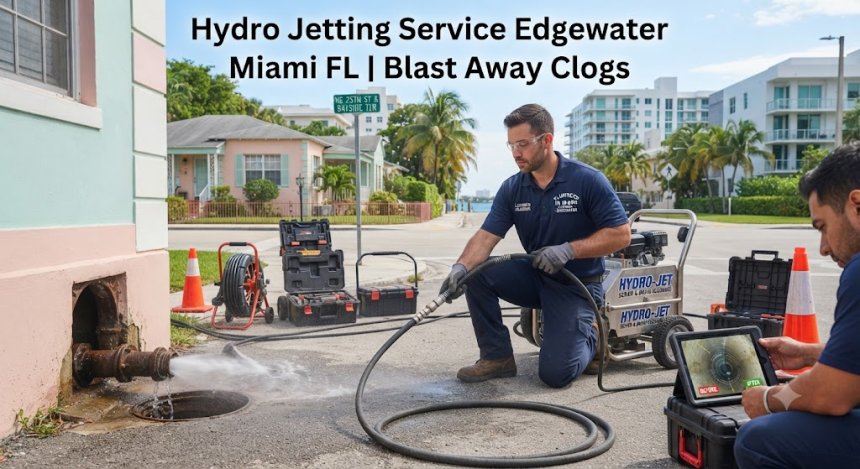
Hydro jetting is the most advanced and effective method of professional drain cleaning available today. Unlike traditional rodding or snaking, which simply punches a small hole through a clog, hydro jetting uses a specialized machine to deliver a high-pressure stream of water directly into your pipes.
The process involves a powerful pump, a high-pressure hose, and a sophisticated nozzle. Our certified plumber feeds the hose into your sewer or drain line via an accessible cleanout. The nozzle, which features multiple forward and backward-facing jets, propels itself forward while scouring the entire inner diameter of the pipe with water pressure typically ranging from 3,500 to 4,000 PSI (pounds per square inch).
This intense water pressure is capable of:
-
Breaking up stubborn clogs: It obliterates blockages caused by tree roots, accumulated grease, paper products, and foreign objects.
-
Scouring pipe walls: It removes years of built-up scale, mineral deposits, sludge, and grease that narrow the pipe and cause recurring clogs.
-
Flushing debris: It washes all the pulverized material completely out of your system, leaving the pipe looking almost new.
In Edgewater’s unique environment—with its mix of sandy soil that encourages root intrusion and high-density living that strains sewer lines—hydro jetting provides a level of clean that no other method can match.
Why Does This Plumbing Problem Happen?
Understanding why sewer and drain lines fail in Edgewater helps underscore why hydro jetting is often the only viable solution.
-
Aging Infrastructure and Cast Iron Corrosion: Many older properties in Edgewater still rely on decades-old cast iron sewer lines. Over time, cast iron corrodes and develops rough, scaly interiors (known as tuberculation). This rough surface acts like sandpaper, catching debris, grease, and roots, leading to inevitable blockages. Hydro jetting is uniquely suited to smoothing out these rough interior walls.
-
Aggressive Tree Root Intrusion: Miami’s tropical climate supports lush vegetation, and trees are notorious for seeking out sources of water. Even microscopic cracks in older clay, concrete, or even compromised PVC pipes will invite root infiltration. Once inside, roots grow rapidly, creating dense masses that block flow. Hydro jetting’s powerful rooter action cuts through these masses completely.
-
Grease Buildup ("Fatbergs"): This is a major issue in both residential and commercial settings (like Edgewater’s many restaurants and condo buildings). Pouring cooking fats, oils, and grease (FOG) down the drain causes them to cool and solidify inside the pipes. These "fatbergs" are incredibly stubborn and adhere strongly to pipe walls. Hydro jetting is the only effective way to emulsify and blast away this hardened grease.
-
Flushing "Non-Flushable" Items: Despite warnings, the flushing of items like "flushable" wipes, paper towels, feminine hygiene products, and excessive toilet paper is a primary cause of main line backups. These items do not break down easily and easily snag on pipe imperfections.
-
Foreign Objects and Construction Debris: In new developments or during renovations, construction debris (cement, grout, pieces of wood) can accidentally enter plumbing lines. Older lines can also collapse or have foreign objects (like tools or toys) lodged within them over time.
Signs You Should Never Ignore
Your plumbing system will almost always provide warning signs before a total failure occurs. Recognizing these early can save you thousands of dollars in water damage restoration.
-
Slow Draining Fixtures: When multiple sinks, tubs, or showers in your home or business drain slowly, it strongly suggests a blockage forming deep in your main sewer line, rather than a localized clog in a single fixture.
-
Gurgling Noises from Drains: Hearing a bubbling or gurgling sound from your toilet or sinks when water is running elsewhere (e.g., when the washing machine is draining) indicates trapped air trying to escape due to a downstream blockage.
-
Foul Odors: Persistent sewer gas smells emanating from your drains suggest significant buildup of organic matter, sewage, or a clog in the vent system.
-
Sewage Backups: This is an emergency. If raw sewage bubbles up through a floor drain, tub, or shower when you flush the toilet or run water, the main line is completely blocked.
-
Multiple Clogged Drains at Once: A simultaneous backup of toilets, sinks, and showers is a definitive sign of a main sewer line blockage.
-
Water Pooling in Yard: Unexplained wet, soggy patches or unusually green patches of grass appearing on your lawn, particularly along the path of your sewer line, can indicate a broken or leaking underground pipe.
-
Pest Infractions: Cracked or leaking sewer pipes attract rodents and insects, which can then enter your property through the drains.
Common Plumbing Problems Related to This Issue
When our local plumbers in Edgewater are called to address a persistent drain issue, they are often handling one of these interconnected problems that hydro jetting is designed to solve:
-
Severe Main Sewer Line Blockages: The primary application for hydro jetting, clearing blockages that stop all wastewater flow from the property.
-
Recurring Drain Clogs: When a toilet or sink clogs repeatedly even after being snaked, it means the underlying buildup (grease, scale) was not removed.
-
Tree Root Infestation: Eliminating roots that have grown into sewer lines.
-
Slow-Moving Commercial Drains: Clearing heavy grease and food waste buildup in restaurants, cafes, and multi-family residential properties common in Edgewater.
-
Preparing Pipes for Lining: Hydro jetting is a crucial preparatory step for trenchless sewer repair (pipe lining), ensuring the pipe walls are perfectly clean for the new liner to adhere.
Step-by-Step Professional Repair Process
When you choose our professional hydro jetting service in Edgewater, you can expect a meticulous and effective procedure:
Step 1: Initial Video Camera Inspection (Essential) We never start a high-pressure cleaning job blindly. Our technician first performs a sewer camera inspection. A waterproof fiber-optic camera is fed into the line to visually diagnose the cause of the clog (roots, grease, break), locate its precise location, and assess the condition and integrity of the pipe. This ensures hydro jetting is safe and appropriate.
Step 2: Honest Diagnosis and Upfront Estimate Based on the camera findings, we explain the problem to you, show you the footage, and provide a clear, upfront estimate for the hydro jetting service. We ensure you understand the scope and cost before any work begins.
Step 3: Setup and Preparation Our technician identifies the best access point to the sewer system, typically an outdoor cleanout. If no cleanout exists, we may need to access the line through a roof vent or by removing a toilet (this will be discussed during the estimate). We lay down protective tarps and prepare the hydro jetting equipment.
Step 4: Hydro Jetting Execution The high-pressure hose and appropriate nozzle are fed into the pipe. The jetter is activated, and the nozzle proceeds to scour the pipe walls, blasting away roots, grease, scale, and debris, which then flow harmlessly downstream to the municipal sewer. The process is methodical and thorough.
Step 5: Post-Cleaning Camera Inspection After the jetting is complete, we perform a second camera inspection. This verifies that the blockage is completely removed and that the pipe interior is thoroughly cleaned and restored to near-original diameter. It also gives you peace of mind seeing the results for yourself.
Step 6: Site Cleanup and Sanitization Once the line is clear and inspected, we retrieve our equipment, clean up any residual water or debris from the access point, and sanitize the work area.
Can You Fix It Yourself?
Understanding the limits of DIY plumbing is crucial for avoiding expensive disasters.
-
What Homeowners Can Safely Do: You can safely clear minor, localized sink or toilet clogs using a standard plunger or a small, homeowner-grade hand snake (auger). These tools are effective for clogs just past the drain trap.
-
What to Avoid (Chemical Cleaners): Never pour caustic chemical drain cleaners into a fully blocked or slow-moving pipe. These dangerous acids generate immense heat that can melt PVC pipes and severely corrode aging cast iron, turning a simple clog into a hazardous plumbing emergency. They are ineffective against tree roots and often just create a toxic, slow-moving sludge.
-
What to Avoid (Renting Equipment): Renting a large, motorized sewer auger without proper training is dangerous. The high-torque cable can whip around and cause severe injury, or it can easily shatter old, brittle clay or corroded cast iron pipes, leading to thousands of dollars in excavation and repair costs.
-
When Professional Plumbing is Necessary: For any main sewer line backup, recurring clogs, suspected tree root intrusion, or problems affecting multiple drains, you must call a licensed professional with the right diagnostic tools (camera) and powerful equipment (hydro jetter).
Tools Professionals Use
Professional plumbers carry specialized equipment that drastically improves repair speed, accuracy, and diagnostic capability compared to homeowner tools.
-
Fiber-Optic Drain Cameras: Waterproof cameras providing live video feeds of pipe interiors to identify exact clog locations, cracks, and root damage.
-
Hydro Jetting Machines: Industrial water blasters scouring pipe walls clean of grease and scale using 4,000 PSI of pressure.
-
Motorized Drain Augers (Snakes): Commercial-grade cable machines with steel cutting heads designed to break through dense obstructions and root masses that homeowner tools cannot touch. (Note: Hydro jetting is often superior to snaking for long-term solutions).
-
Electronic Pipe Locators: Transmitters used to map the exact underground path and depth of sewer lines before digging (if necessary).
How Long Does the Service Usually Take?
Hydro jetting is surprisingly efficient, often taking less time than you might expect for such a powerful service.
-
Standard Residential Hydro Jetting: For a typical residential main line clog (e.g., clearing roots or grease buildup), the entire process—from initial camera inspection to setup, jetting, and final verification—usually takes 1.5 to 3 hours.
-
Factors Affecting Time:
-
Severity of the Blockage: Extremely dense root infiltration or hardened "fatbergs" may require more time and multiple passes.
-
Pipe Accessibility: The presence or absence of accessible cleanouts can significantly impact setup time.
-
Length of the Line: Very long sewer laterals will naturally take longer to jet completely.
-
Cost Factors
Ethical plumbing companies in Miami-Dade provide pricing based on tangible variables rather than fixed, sight-unseen quotes. The final cost of a hydro jetting service depends on:
-
Severity and Type of Clog: Clearing simple soft blockages requires less time and equipment than removing extensive tree roots or hardened grease.
-
Pipe Accessibility: Lack of an accessible outdoor cleanout may require more labor-intensive access methods (e.g., removing a toilet).
-
Length and Diameter of the Pipe: Longer and wider pipes require more time and water volume to clean effectively.
-
Emergency Service Charges: After-hours, weekend, or holiday urgent dispatches generally carry a higher rate.
-
Location: Properties with limited access or difficult terrain (common in some older Edgewater areas) may have higher labor costs.
Plumbing repair costs vary depending on the severity of the problem, accessibility, materials required, emergency service, property type, and local labor rates.
Hidden Truths Homeowners Should Know
Understanding the practical realities of drainage maintenance protects your property from unexpected expenses:
-
Small Leaks Bankrupt Budgets: A dripping faucet wastes thousands of gallons a year, but a small pinhole leak in a pressurized line under your foundation will eventually erode the soil, causing your slab to crack and your home to settle.
-
Chemical Cleaners Destroy Pipes: Store-bought drain acids create heat that can melt PVC glue and will eat away at the bottom of aging cast-iron sewer pipes, turning a slow drain into a major structural leak.
-
Insurance Dislikes Neglect: Homeowner’s insurance policies cover sudden, accidental water damage (like a burst pipe), but they routinely deny claims if the damage was caused by long-term, neglected maintenance (like a slow leak you knew about for months).
-
Tree Roots Always Return: If you only snake a root-infested line, the roots will grow back thicker and stronger within 6–12 months. Only hydro-jetting or chemical root killers provide long-term relief.
-
Hard Water Kills Appliances: Without a water softener or regular flushing, Miami's hard water will coat your water heater’s heating elements in scale, causing them to overheat and fail in half their expected lifespan.
-
Flushable Wipes Are a Lie: Plumbers make a significant portion of their income removing "flushable" wipes that do not break down in the sewer system. They must be disposed of in the trash, not the toilet.
-
DIY Fixes Rarely Hold: The pressure in municipal water lines is immense. Rubber patches, epoxy putties, and clamps are temporary band-aids that will inevitably fail, usually when you are away from home.
-
Mold Moves Fast: In South Florida’s high humidity, water leaking behind a wall will begin growing toxic mold within 24 to 48 hours.
-
Annual Maintenance Saves Money: Investing in an annual plumbing inspection, drain cleaning, and water heater flush is vastly cheaper than paying for emergency after-hours service and water damage restoration.
-
Cheap Parts Cost More in the Long Run: Buying a $30 generic faucet cartridge online usually means you will be doing the job again in six months. Professional-grade parts installed by a plumber come with warranties and reliability.
15 Common Mistakes Homeowners Make
Avoiding these everyday errors will protect your home’s plumbing infrastructure.
-
Ignoring Minor Leaks: Assuming a small drip under the sink isn't a big deal until the cabinet base rots out.
-
Flushing Wipes and Paper Towels: Treating the toilet like a trash can leads to major sewer blockages.
-
Pouring Grease Down the Drain: Liquid fat turns into a solid plug of grease once it hits cold underground pipes.
-
Using Harsh Drain Chemicals: Opting for corrosive acids instead of a mechanical snake or plunger.
-
Ignoring Water Pressure Surges: Failing to install a pressure-reducing valve when municipal pressure is too high.
-
Hiring Unlicensed Handymen: Using uninsured workers for complex plumbing tasks that require permits.
-
Skipping Water Heater Flushes: Letting sediment build up and destroy the tank.
-
Waiting for a Catastrophe: Delaying a service call for a slow drain until raw sewage backs up into the shower.
-
Mixing Pipe Materials Badly: Connecting copper directly to galvanized steel without a dielectric union (causing rapid galvanic corrosion).
-
Over-Tightening Fittings: Cranking down on plastic toilet supply nuts or faucet connections until they crack.
-
Neglecting Outdoor Cleanouts: Letting dirt and landscaping bury exterior sewer access points.
-
Disposing of Paint and Solvents: Pouring construction waste down drains.
-
Overloading the Garbage Disposal: Stuffing fibrous vegetable peels, eggshells, and coffee grounds into the disposal.
-
Ignoring Gurgling Toilets: Dismissing bubbling sounds that indicate venting and blockage issues.
-
Not Knowing the Shut-Off Location: Panicking during a burst pipe because no one in the house knows where the main water valve is.
Maintenance Tips
Keep your plumbing running smoothly year-round with these practical, seasonal tips.
-
Locate the Main Valve: Tag your main water shut-off valve so anyone in the family can find it instantly during an emergency.
-
Test the Shut-Off: Turn the main valve off and on twice a year to ensure it hasn't seized up from hard water scale.
-
Use Drain Strainers: Put inexpensive mesh catchers in every shower, tub, and sink to stop hair and soap scum before they cause a clog.
-
Flush Your Water Heater: Attach a hose to the drain valve and flush the sediment out of your tank every 12 months to extend its life and efficiency.
-
Check Your Anode Rod: Have a plumber inspect your water heater's sacrificial anode rod every three years to prevent tank rust.
-
Clean Aerators: Unscrew faucet aerators every few months and soak them in vinegar to dissolve mineral scale and maintain pressure.
-
Treat Drains with Enzymes: Use