What Is a Plumbing Shut-Off Valve? Locations & Guide
Learn what a plumbing shut-off valve does, where to find it, how to use it, and when to call a plumber for leaks or valve problems.

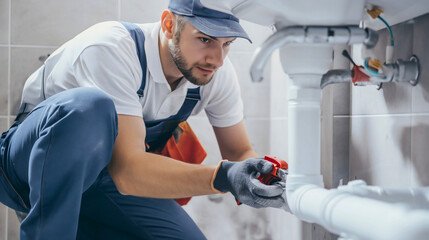
A plumbing shut-off valve is a small but extremely important part of your home's plumbing system.
It allows you to stop the flow of water to a specific fixture, appliance, section of plumbing, or the entire property.
Knowing where your shut-off valves are located can make a major difference during a plumbing emergency.
Imagine discovering water pouring from a broken supply line underneath your kitchen sink. If you know exactly where the valve is, you may be able to stop the water within seconds and limit property damage while waiting for professional assistance.
If you don't know where the valve is, valuable time can be lost searching while water continues spreading through cabinets, walls, flooring, or ceilings.
For Florida homeowners, understanding the location and operation of shut-off valves is especially useful during major leaks, hurricanes, plumbing failures, water-heater problems, and extended periods when a property is vacant.
What Is a Plumbing Shut-Off Valve?
A plumbing shut-off valve is a device designed to control or stop water flowing through a plumbing line.
Depending on the valve's location, it may control:
- One faucet
- One toilet
- A water heater
- A washing machine
- An outdoor fixture
- A bathroom
- A kitchen
- Part of the home
- The entire home's water supply
Shut-off valves are normally opened during everyday use.
When a plumbing fixture needs repair or a leak occurs, the appropriate valve can be closed to stop or reduce water flow.
Why Are Shut-Off Valves Important?
A shut-off valve can turn a potentially major water emergency into a much smaller repair.
For example:
Without a working valve:
A failed toilet supply line can continue releasing water until someone reaches the main water supply.
With a working valve:
You can close the toilet's individual shut-off valve and stop the flow to that fixture.
This can help protect:
- Flooring
- Cabinets
- Drywall
- Furniture
- Electrical equipment
- Personal belongings
It also gives a plumber safer access to the affected fixture.
Where Is the Main Water Shut-Off Valve Located?
The main water shut-off valve controls the water supply entering your home or property.
Its location varies significantly depending on the home's construction, age, utility arrangement, and local plumbing design.
Common locations include:
Near the Water Meter
Some homes have the main shutoff near the water meter.
The meter may be located:
- Near the front property line
- In a meter box
- Near a sidewalk
- Near a driveway
- In another designated utility area
There may be separate utility-side and property-side valves, so homeowners should understand which valve they are permitted and equipped to operate.
Inside the Home
The main shutoff may be located inside:
- A garage
- Utility room
- Mechanical room
- Basement
- Crawl space
- Under a staircase
- Near where the water service enters the building
Near the Water Heater
In some plumbing layouts, you may find a major supply shutoff near the water heater, although this should not automatically be assumed to be the home's main shutoff.
Where Is the Water Shut-Off Valve in a Florida Home?
Florida homes can have different plumbing layouts, so there isn't one universal location.
Start by checking:
- Near the water meter
- Where the main water line enters the house
- Garage utility areas
- Mechanical rooms
- Near the water heater
- Crawl spaces
- Exterior walls
- Utility closets
If you recently purchased the home, ask the previous owner, property manager, builder, or plumber where the main valve is located.
Find it before an emergency happens.
Where Are Individual Shut-Off Valves Located?
Most plumbing fixtures have their own local shut-off valve.
These valves are usually much easier to access than the main valve.
Kitchen Sink
Look underneath the sink cabinet.
You may see one valve for cold water and another for hot water.
Bathroom Sink
Check beneath the vanity or sink.
There are commonly separate hot- and cold-water supply valves.
Toilet
The toilet shutoff is usually located on the wall or floor behind or beside the toilet.
It connects the water supply line to the toilet tank.
Washing Machine
Washing-machine supply valves are generally located behind the appliance.
Water Heater
Water heaters typically have a cold-water supply shutoff.
The exact arrangement varies by installation.
Outdoor Faucet
An exterior hose bib may have an individual shutoff, particularly in some plumbing configurations.
Different Types of Plumbing Shut-Off Valves
Several valve designs are commonly found in residential plumbing.
Ball Valve
A ball valve typically has a lever handle.
To close it, the handle is generally turned so it is perpendicular to the pipe.
Ball valves are popular because they can provide reliable shutoff when properly installed and maintained.
Gate Valve
Gate valves commonly have a round wheel handle.
They open and close by turning the handle.
Older gate valves can become difficult to operate as they age.
Globe Valve
Globe valves are designed for controlling flow and may be found in certain plumbing applications.
Angle Stop Valve
Angle stops are commonly installed at fixtures such as:
- Toilets
- Bathroom sinks
- Kitchen sinks
They allow individual fixtures to be isolated without shutting off the entire house.
How Do You Shut Off Water to Your House?
If you need to stop the home's water supply:
Step 1: Locate the Main Shut-Off
Find the valve controlling the water entering the property.
Step 2: Determine the Valve Type
It may have a lever, wheel, or another operating mechanism.
Step 3: Close the Valve
For a typical lever-style ball valve, rotate the handle until it is perpendicular to the pipe.
For a wheel-style valve, turn it clockwise until closed without using excessive force.
Step 4: Open a Faucet
Open a nearby faucet to relieve pressure and verify that water flow has stopped.
Step 5: Contact a Plumber
If the cause of the problem isn't obvious or water continues flowing, professional assistance may be necessary.
Never force a stuck valve.
An old valve can break or begin leaking when excessive force is applied.
How Do You Shut Off Water to a Toilet?
If a toilet is overflowing or its supply line is leaking:
- Locate the shut-off valve near the toilet.
- Turn the valve clockwise if it is a traditional multi-turn valve.
- For a lever-style valve, turn the handle to the closed position.
- Confirm that water stops entering the toilet tank.
If the toilet continues to overflow because of water already inside the bowl, you may need to address the toilet itself after shutting off the supply.
How Do You Shut Off Water to a Sink?
Look beneath the sink.
Most installations have separate hot- and cold-water shutoff valves.
Close the valve connected to the leaking line.
If the valve doesn't work or begins leaking when operated, shut off the main water supply and contact a plumber.
What If the Shut-Off Valve Is Stuck?
Don't force it.
A stuck valve may be:
- Corroded
- Mineral-encrusted
- Internally damaged
- Seized from years of inactivity
Using excessive force can break the valve or damage the connected pipe.
Instead:
- Stop applying force.
- Locate the main shutoff if necessary.
- Place a container or towel beneath a leaking valve.
- Contact a qualified plumber.
A plumber can determine whether the valve should be repaired or replaced.
What If the Shut-Off Valve Is Leaking?
A valve can leak from:
- The valve body
- The stem
- A connection
- The packing area
- A damaged fitting
Don't assume tightening everything will solve the problem.
Over-tightening can make the situation worse.
If a shutoff valve is leaking, have it professionally evaluated, particularly if it is the main water shutoff.
Why Won't My Main Water Shut-Off Valve Turn?
Several things can cause a valve to become difficult to operate.
Age
Older valves may deteriorate internally.
Corrosion
Metal components can corrode over time.
Mineral Deposits
Mineral buildup can interfere with operation.
Lack of Use
A valve that hasn't moved in years may become stuck.
Mechanical Damage
The handle or internal components may be damaged.
If the valve doesn't move with reasonable effort, don't force it.
Should You Test Your Shut-Off Valves?
Yes.
Homeowners should know whether their shut-off valves actually work before an emergency occurs.
However, be careful with old valves.
If a valve looks heavily corroded or fragile, don't aggressively operate it.
A plumber can inspect and replace unreliable shutoffs before they're needed.
What Are the Warning Signs of a Bad Shut-Off Valve?
Look for:
- Visible corrosion
- Rust
- Mineral buildup
- Water around the valve
- Difficulty turning the handle
- A valve that won't fully close
- Leaking around the stem
- Damaged handles
- Persistent dripping after closing the valve
A valve that doesn't completely stop water flow should be repaired or replaced when appropriate.
Why Old Shut-Off Valves Can Become a Problem
Many homeowners never touch their shut-off valves.
That means a valve may sit unused for years.
When an emergency finally happens, the homeowner discovers that:
The valve doesn't work.
This is why shut-off valves are worth checking as part of routine plumbing maintenance.
Replacing an aging valve during a planned plumbing repair is often much easier than discovering the problem during a flood.
Shut-Off Valves and Water Heater Emergencies
Water heaters have their own water supply shutoff.
If a water heater develops a major leak, shutting off its cold-water supply can help limit incoming water.
However, shutting off the water doesn't necessarily eliminate every hazard.
If you're dealing with a gas or electrical water heater, follow the manufacturer's safety instructions and use appropriate professional assistance.
If water is near electrical equipment, avoid contact with the affected area.
What Should You Do During a Major Plumbing Leak?
If water is rapidly entering the home:
1. Stop the Water
Close the appropriate fixture valve or main shutoff if safe.
2. Protect People and Property
Move belongings away from the water when possible.
3. Avoid Electrical Hazards
Don't enter areas where water may have contacted electrical equipment.
4. Document the Damage
Take photos and videos if doing so is safe.
5. Contact a Plumber
Professional diagnosis may be necessary to identify and repair the source.
6. Address Water Damage
Significant water intrusion may require additional restoration services.
Can a Shut-Off Valve Prevent Water Damage?
A shut-off valve itself doesn't prevent a pipe from breaking.
What it does is allow you to stop the water after a problem occurs.
That can significantly reduce the amount of water released.
For example, a $10–$30 fixture valve can potentially prevent hours of uncontrolled water flow from a failed supply line—but the actual value depends on the situation.
Smart Automatic Water Shut-Off Systems
Some homeowners install automatic leak-detection and water-shutoff systems.
These systems may use sensors to detect:
- Leaks
- Unusual water flow
- Flooding
- Continuous water use
Depending on the system, the device can automatically close the home's water supply.
These systems can be particularly useful for:
- Vacation homes
- Rental properties
- Frequently vacant houses
- Homes with previous leak problems
- Properties with expensive finishes
A professional can help determine whether an automatic shutoff system is appropriate.
Florida Homeowners and Hurricane Preparation
Florida homeowners should know how to shut off the property's water supply before severe weather.
Before leaving a property for an extended period:
- Locate the main shutoff.
- Make sure it is accessible.
- Check for obvious leaks.
- Know who to contact for emergency plumbing service.
- Consider whether shutting off the water is appropriate for the property's specific circumstances.
During hurricane preparation, also follow official emergency and utility guidance.
Apartment and Rental Property Shut-Off Valves
Apartment residents may not have direct access to the building's main water valve.
Instead, the unit may have:
- Individual fixture shutoffs
- A unit-level main shutoff
- A utility closet valve
- A building-managed water shutoff
Tenants should ask their landlord or property manager where the unit's water shutoff is located.
For a major leak, follow the property's emergency maintenance procedure.
Commercial Property Shut-Off Valves
Businesses often have more complex plumbing systems.
There may be separate shutoffs for:
- Restrooms
- Kitchens
- Water heaters
- Irrigation
- Mechanical systems
- Specific building sections
Commercial property owners and managers should maintain clear records showing where major shutoffs are located.
Hidden Truths Homeowners Should Know
A shutoff valve is useless if you can't find it
Locate it before an emergency.
Old valves can fail when you need them most
Age and corrosion can make operation unreliable.
Don't force a valve
Breaking the valve can turn a small problem into a major leak.
One valve doesn't control everything
Individual fixtures may have their own shutoffs.
Main shutoff locations vary
Don't assume every home has the valve in the same place.
Replacing valves during planned repairs makes sense
If a plumber is already working on a fixture and finds a severely deteriorated shutoff, replacement may be worth discussing.
15 Common Shut-Off Valve Mistakes
1. Not knowing where the main valve is
Find it today.
2. Waiting until an emergency to test it
Check the condition beforehand.
3. Forcing a stuck valve
This can cause damage.
4. Turning a corroded valve aggressively
Have a plumber inspect it.
5. Assuming the fixture valve works
A valve may look functional but fail to fully close.
6. Ignoring a leaking valve
A leaking valve should be evaluated.
7. Hiding valves behind permanent finishes
Shutoffs should remain accessible.
8. Blocking access with cabinets or storage
Keep important shutoffs reachable.
9. Forgetting about outdoor shutoffs
Exterior plumbing may have separate controls.
10. Not labeling valves
Clear labels can save time.
11. Not teaching household members
Everyone who lives in the home should know basic shutoff procedures.
12. Ignoring old valves during renovations
Renovation work can be a good time to update inaccessible or unreliable shutoffs.
13. Using tools to force valves
Tools can damage handles and components.
14. Ignoring water pressure problems
Pressure issues can contribute to plumbing failures.
15. Assuming shutoff valves never need maintenance
Old valves can deteriorate just like other plumbing components.
Maintenance Tips for Plumbing Shut-Off Valves
- Learn the location of your main shutoff.
- Label important valves.
- Keep valves accessible.
- Check for visible corrosion.
- Watch for leaks around valve connections.
- Don't paint over valve handles.
- Keep storage away from important shutoffs.
- Check fixture shutoffs during plumbing maintenance.
- Replace damaged valves promptly.
- Don't force stuck valves.
- Have severely corroded valves professionally inspected.
- Know where the water meter is located.
- Keep emergency plumbing contacts available.
- Teach family members basic shutoff procedures.
- Photograph important plumbing locations if useful for future reference.
- Consider automatic shutoff technology for properties where it provides practical value.
When Should You Call an Emergency Plumber?
Call a professional when:
- The main shutoff won't close
- A shutoff valve is leaking heavily
- A pipe has burst
- Water is flooding the property
- A fixture valve won't stop water flow
- A concealed leak is suspected
- A water heater is leaking significantly
- Sewage is backing up
- Water is approaching electrical equipment
If water is near electrical systems, don't enter the affected area unless it is safe to do so.