Emergency Plumber in Miami FL: What to Do When a Pipe Bursts
Discover what steps to take when a pipe bursts in your Miami home. Learn how to stop water damage, find the main shut-off valve, and evaluate repairs.

Immediate Actions When a Pipe Bursts
When a pipe suddenly ruptures inside a home, every second counts. The sound of rushing water behind a wall or underneath a floor instantly signals an urgent plumbing emergency. Before looking for a tool or calling for help, your absolute priority must be stopping the flow of water to prevent catastrophic structural damage and mold growth.
Locating and operating your property's main water shut-off valve is the single most important damage-control step you can take. In many single-family properties in the Miami area, this valve is typically located near the front property line inside a concrete utility box near the street, or on an exterior wall where the main supply line enters the home. If you live in a condominium or a high-rise building, your unit-level shut-off valve is often located in a utility closet, near the water heater, or adjacent to the main bathroom entry. Make sure every adult in your household knows where this valve is located before an emergency happens.
Shutting Off Utilities Safely
Water and electricity are a dangerous combination. If water is spraying near electrical outlets, service panels, light fixtures, or large appliances, turn off the electricity to the affected area at your main circuit breaker panel if you can do so safely without standing in standing water. Never step into accumulated water to reach a breaker box if the water level is high or if there is any risk of electrical shock. In these situations, prioritize personal safety and wait for professional assistance.
Understanding Why Pipes Burst
Pipes rarely burst without underlying mechanical stress or material degradation. Understanding why a failure occurred helps determine whether you are dealing with an isolated local defect or a widespread vulnerability in your plumbing system.
- Material Aging and Corrosion: Older homes built decades ago may still contain galvanized steel or early-generation polybutylene piping, which becomes brittle and prone to structural failure over time.
- Water Pressure Stress: Excessive municipal water pressure can continuously strain pipe walls, fittings, and joint connections until a weak point gives way.
- Soil Movement and Slab Shifting: Ground movement beneath slab foundations can place undue shear stress on copper or cast-iron supply and drainage lines running underneath floors.
- Chemical and Mineral Action: Hard water minerals and aggressive chemical drain cleaners can compromise pipe integrity from the inside out over extended periods.
Hidden Clues Before a Complete Rupture
A burst pipe is often the final stage of a prolonged problem. Long before water begins gushing through drywall or pooling across flooring, warning signs usually appear. A sudden, unexplained spike in your monthly water bill often indicates a slow, hidden pinhole leak. Persistent musty odors, damp baseboards, peeling paint, or warm spots on a concrete slab floor can all point toward a compromised water line that requires immediate professional evaluation.
Evaluating the Scope of the Damage
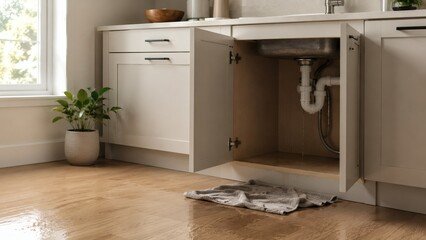
Once the water is shut off and the immediate emergency is contained, assessing the physical extent of the plumbing failure requires careful observation. The visible location where water emerges does not always reveal where the pipe actually failed. Water follows the path of least resistance, traveling along framing members, subflooring, and pipe exteriors before finally pooling or staining a ceiling or wall far away from the actual breach.
For residents in multi-story properties, apartments, or shared buildings, a burst supply line can quickly affect units located below. In these communal living environments, notifying building management or your homeowners association (HOA) immediately is essential, as the leaking line may be part of a shared vertical stack or common building supply rather than an isolated private fixture.
Safe Homeowner Checks Versus Professional Scope
Homeowners can safely perform several initial assessments while waiting for professional help to arrive, but attempting complex physical repairs during an active emergency can easily worsen the problem.
| Safe Homeowner Action | Actions Requiring a Professional |
|---|---|
| Locating and turning off the main water supply valve. | Cutting, removing, or soldering pressurized supply pipes. |
| Safely cutting power at the breaker panel if dry and safe. | Diagnosing internal wall or slab-foundation leaks. |
| Moping up standing water and documenting damage for insurance. | Replacing sections of deteriorated main lines or risers. |
| Opening unaffected faucets to drain residual pressure. | Performing electronic leak detection and pressure testing. |
Temporary rubber patch kits or clamping devices sold at hardware stores should only be viewed as short-term emergency stopgaps. They do not replace structural pipe repair and often fail under normal operating pressure once applied over corroded or weakened metal.
Repair Options and What Affects Costs
When a professional plumber arrives to repair a burst pipe, the chosen solution depends entirely on the material, location, and condition of the surrounding plumbing network. Spot repairs using modern crimp rings and PEX piping or copper couplings are common for accessible wall or ceiling breaches. However, if a pipe burst due to widespread internal corrosion, a localized patch may only buy temporary relief before another section fails nearby.
Several factors heavily influence the overall complexity and cost of a burst pipe repair:
- Location and Accessibility: Repairing an exposed pipe in an open utility room requires significantly less labor than accessing a broken line buried beneath a concrete slab floor or hidden inside a finished lath-and-plaster wall.
- Pipe Material: Working with older rigid materials often requires transition fittings, specialized cutting tools, or extensive re-piping of entire branch lines to ensure a secure connection.
- Restoration and Cleanup: Drywall removal, flooring extraction, structural drying, and subsequent cosmetic reconstruction can often account for a substantial portion of total recovery costs.
- Emergency Timing: After-hours, weekend, or holiday emergency dispatch involves mobilization adjustments that affect labor rates compared to scheduled daytime service.
Frequently Asked Questions
How can I find my main water shut-off valve quickly in an emergency?
In single-family properties, look near the perimeter of the foundation facing the street or inside an in-ground utility box near the property boundary. In apartments or condominiums, check near the water heater closet, behind access panels in utility rooms, or consult your building management office.
Does homeowners insurance cover damage caused by a burst pipe?
Many standard homeowners policies cover sudden and accidental water damage resulting from a burst pipe, but coverage for the repair of the actual worn-out plumbing pipe itself often depends on the specific policy terms and the age of the plumbing system.
Can I use my plumbing system after shutting off the main valve?
No. Once the main water valve is closed, turning on indoor faucets or flushing toilets will only drain the remaining water stored in the pipes and water heater. Do not attempt to use fixtures until the damaged pipe has been fully repaired and the water supply is safely restored.
Why did my pipe burst if there was no freezing weather?
Pipes fail for many reasons unrelated to freezing temperatures. Excessive water pressure, severe internal mineral scaling, aggressive corrosion, physical shifting of building foundations, or accidental impact during remodeling can all cause pipes to rupture.
How long does it take a professional plumber to fix a burst pipe?
A straightforward repair on an easily accessible pipe may take only one to two hours. However, if the damaged pipe is located deep within a wall, ceiling, or beneath a concrete slab, the diagnostic, access, repair, and testing process can take considerably longer.
Should I replace all the old pipes if one bursts?
If a pipe bursts due to age-related degradation or widespread material failure, a professional plumber may recommend evaluating a whole-home repiping project. Patching one weak spot on an old, brittle plumbing system often leads to additional failures shortly thereafter.