Copper vs. PEX Repiping: Which Is Best for Miami Homes?
Compare rigid copper and flexible PEX repiping for Miami homes. Learn how South Florida's coastal air and hard water impact your plumbing system.

Choosing Between Copper and PEX for Miami Home Repiping
Deciding between rigid copper and flexible cross-linked polyethylene (PEX) for a whole-house repipe in Miami depends heavily on South Florida's unique environmental factors, including aggressive municipal water chemistry, high humidity, and shifting coral limestone foundations. When aging galvanized steel or failing polybutylene pipes begin leaking or restricting water flow, homeowners must weigh the structural durability, chemical reactivity, and installation mechanics of both material types to protect their property from catastrophic water damage.
Physical System Mechanics: How Miami Water and Soil Affect Pipes
Water supply systems in Miami-Dade County operate under continuous municipal pressure, typically ranging between 50 and 80 PSI. This hydraulic force subjects supply lines to constant stress, which is exacerbated by thermal expansion whenever water heaters cycle. Furthermore, South Florida's high water table, sandy soils, and shifting coral limestone bedrock create subtle ground movements that place mechanical strain on rigid subterranean and under-slab water lines.
Chemistry also plays a critical role in system degradation. Miami's water supply carries mineral content and disinfectant residuals that can accelerate internal corrosion in metal pipes over decades. When pinhole leaks develop beneath concrete slabs or inside drywall cavities, water often travels horizontally along foundation cracks or structural studs, making the actual point of failure appear far removed from where the dampness eventually surfaces on walls or floors.
Overlooked Trade Secrets in South Florida Repiping
Standard plumbing guides often miss regional vulnerabilities that dictate how piping materials perform in coastal environments:
- Coastal Salt Air Corrosion: Properties in Miami Beach, Brickell, and other coastal zones experience accelerated exterior corrosion. Airborne salt mist aggressively degrades exposed brass fittings, water heater inlet/outlet nipples, and pressure-reducing valves (PRVs) if not properly isolated and maintained.
- Static Pressure vs. Dynamic Flow: Older Miami homes with narrow or heavily scaled 1/2-inch supply lines experience severe pressure drops when multiple fixtures run simultaneously. Upgrading to modern diameter configurations improves overall flow rate (GPM).
- Thermal Expansion in PEX: Unlike rigid copper, PEX tubing expands and contracts noticeably along its length with temperature changes. Proper installation requires specific expansion loops or slack to prevent fitting stress at rigid terminal points.
- Rodent and UV Vulnerability: PEX tubing is susceptible to damage from UV radiation if left exposed outdoors, and rodents have been known to chew through unprotected plastic lines in attics or crawlspaces.
Safe Homeowner Triage vs. Dangerous DIY Boundaries
Recognizing the limits of safe intervention prevents minor plumbing issues from escalating into major structural emergencies.
Safe Homeowner Steps
- Locate and test your main indoor water shutoff valve regularly to ensure it operates smoothly in an emergency.
- Monitor your water meter's low-flow indicator dial when all household fixtures are turned off to detect hidden supply leaks.
- Perform periodic visual inspections of exposed piping in water heater closets, garage utility sinks, and under bathroom vanities.
Explicit Safety Warnings
- Never attempt to modify or repair pressurized main supply lines without fully isolating the section and relieving internal pressure.
- Avoid using chemical leak-sealing additives designed to circulate through domestic drinking water systems; these products can foul fixture aerators, valves, and water filtration units.
- Do not work on water lines in close proximity to electrical panels or exposed wiring if active leaks have compromised the surrounding space.
Copper vs. PEX: Material Comparison for Miami Properties
Reviewing the physical characteristics and installation demands of each material clarifies how they perform under residential conditions in Miami-Dade County:
| Feature | Rigid Copper | Flexible PEX |
|---|---|---|
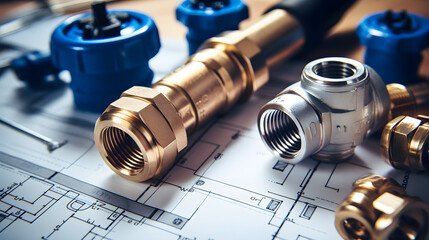
| Lifespan Expectancy | 50+ years under favorable water conditions | 30 to 50 years (UV and chemical dependent) |
| Corrosion Resistance | Vulnerable to aggressive or acidic water chemistry and exterior salt air | Highly resistant to scale buildup, electrolysis, and chemical corrosion |
| Installation Labor | High labor intensity requiring torch soldering, brazing, or press fittings | Faster installation requiring fewer fittings and expansion or crimp tools |
| Foundation Adaptability | Rigid; highly susceptible to shearing if slab or soil shifts significantly | Flexible; accommodates minor structural settling and thermal movement |
| Cost Profile | Higher material and labor cost due to rigid joint configuration | Generally more cost-effective for whole-house retrofits and overhead runs |
Realistic Repair Approaches and Decision Support
When planning a repipe, property owners generally choose between sectional pipe replacement and a complete supply system overhaul. Spot repairs using clamps or slip couplings are merely temporary bandaids when aging pipes suffer from widespread internal pitting or exterior corrosion. A whole-house repipe replaces the entire network from the main shutoff valve to all individual fixture drops.
In Miami, project scope and pricing are influenced by specific logistical factors:
- Construction Type: Homes built on monolithic concrete slabs often require trenching or abandoning under-slab lines in favor of overhead attic routing for PEX, whereas multi-story homes and high-rise condominiums involve complex riser access and core drilling through concrete structural slabs.
- Permitting and Compliance: Miami-Dade County building departments require proper permits and inspections for major plumbing alterations to ensure compliance with current Florida Building Code standards regarding backflow prevention and pipe support spacing.
- Drywall Restoration: Accessing wall cavities to remove old rigid piping requires strategic cutouts, followed by professional drywall patching, texture matching, and painting.
Frequently Asked Questions
Is PEX pipe approved for use throughout Miami-Dade County?
Yes, PEX tubing is fully approved under the Florida Building Code for residential water distribution systems, provided it meets recognized ASTM standards and is installed in accordance with manufacturer specifications and local municipal amendments.
Does hard water in Miami degrade copper pipes faster?
While hard water itself does not automatically ruin copper, specific mineral compositions, high flow velocities, and low pH levels can lead to erosion-corrosion and pinhole leaks over time, particularly in older Type M copper tubing.
Can PEX be installed directly underneath a concrete slab?
While PEX can be run beneath slabs, best practices in South Florida often involve abandoning compromised under-slab copper lines and routing new PEX lines overhead through the attic space to eliminate future slab penetration risks and simplify future maintenance.
How long does a whole-house repipe take for an average Miami home?
A typical residential repipe for a single-family home in Miami usually takes between two to five working days, depending on the square footage, number of wet walls, accessibility of attic spaces, and the extent of required drywall access.
Will a repipe require turning off the municipal water supply?
Yes, the main water supply must be temporarily shut off at the property's curb stop or main indoor shutoff valve while connections are being made. Plumbers typically restore water service at the end of each working day during multi-day projects.