Commercial Water Heater Maintenance Basics & Care Guide
Learn essential commercial water heater maintenance steps, diagnostic clues for early failure, and factors influencing repair versus replacement.

Understanding Commercial Water Heater Maintenance Basics
Commercial water heaters operate under extreme daily demands that residential units rarely experience. Whether installed in a bustling Miami restaurant, a multi-story office building, a local hotel, or a large retail property, these heavy-duty systems provide continuous hot water to support sanitation, operations, and resident comfort. Because commercial units run constantly and handle high recovery volumes, routine maintenance is not merely an optional recommendation—it is a critical operational safeguard.
Ignoring basic upkeep accelerates internal component wear, causes sediment accumulation, reduces energy efficiency, and frequently leads to catastrophic premature tank failure. Understanding what a commercial water heater maintenance routine involves, recognizing early warning signs of component fatigue, and knowing how to interpret operational clues can save property managers and business owners from sudden operational shutdowns and expensive emergency repairs.
How Commercial Water Heaters Differ From Residential Units
Before establishing a maintenance schedule, it helps to understand why commercial systems require a distinct operational approach. While residential water heaters typically run intermittently for a single household, commercial units often fire continuously for hours during peak demand periods.
Commercial systems generally feature higher BTU input ratings for gas units or higher electrical kilowatt draws for electric models. Many commercial facilities utilize multiple tank setups, storage tank and boiler combinations, or heavy-duty tankless arrays linked together. Because water usage is heavy and constant, commercial units process significantly more water volume, which directly accelerates mineral scaling inside the tank or heat exchanger.
The Core Components Requiring Regular Inspection
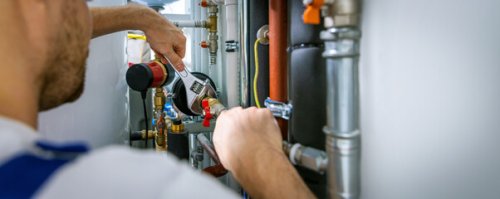
A structured maintenance program focuses on several critical mechanical and electrical parts. Each component plays a specific role in keeping the system safe, efficient, and reliable.
- Anode Rods: Sacrificial metal rods designed to corrode instead of the steel tank walls. In commercial settings with high water usage, these rods deplete much faster than residential counterparts.Temperature and Pressure (T&P) Relief Valve: A critical safety device designed to discharge water if internal pressure or temperature exceeds safe limits. A stuck or scaled T&P valve creates serious safety hazards.Burners and Venting Systems (Gas Units): Gas-fired commercial water heaters require clean burners, proper combustion air intake, and unobstructed exhaust venting to prevent carbon monoxide risks and efficiency loss.Heating Elements and Thermostats (Electric Units): Commercial electric water heaters rely on multiple heavy-duty elements and sequencing relays that must be tested for electrical draw and resistance.Sediment and Scale Buildup: Minerals dissolved in water precipitate out under heat, settling at the bottom of storage tanks or coating internal heat exchanger coils.
Recognizing Early Warning Signs of Failure
Waiting for a commercial water heater to stop producing hot water entirely often results in operational downtime and emergency service calls. Facility managers should monitor for subtle diagnostic clues that indicate internal stress or developing faults.
Unusual noises, such as rumbling, popping, or snapping sounds from inside a tank, usually indicate heavy sediment accumulation trapping steam pockets against the bottom burner or heating element. A sudden spike in energy bills without a corresponding increase in hot water consumption often points toward severe scaling, which forces the system to run longer cycles to heat the same volume of water. Mild discoloration in hot water can signal internal tank corrosion or deteriorating anode rods before a full leak occurs.
Step-by-Step Commercial Maintenance Practices
Routine upkeep should follow a disciplined schedule. While facility staff can perform basic visual checks, complex mechanical servicing requires qualified professional assistance.
1. Monthly Visual and Operational Checks
Inspect the surrounding utility area for puddles, moisture, or active leaks around pipe connections and valves. Check the control panel display or indicator lights for error codes. Confirm that the clear space around the unit remains free of storage boxes, cleaning supplies, and debris to maintain safe combustion or electrical clearance.
2. Quarterly T&P Valve Testing
Safely test the temperature and pressure relief valve by gently lifting the test lever to verify that water discharges freely through the drain line and that the valve reseals completely upon release. If a T&P valve drips continuously after testing, mineral deposits are preventing proper closure, and the valve must be replaced immediately.
3. Semi-Annual Tank Flushing and Sediment Removal
In regions with hard water, sediment settles rapidly at the base of storage tanks. Semi-annual tank flushing removes loose scale before it hardens into an insulating layer. During this process, a technician drains a portion of the tank until the discharged water runs clear. However, if a commercial tank has gone unmaintained for several years, standard flushing can sometimes dislodge large scale chunks that prevent the drain valve from sealing. In such cases, professional descaling procedures or tank inspection are necessary.
4. Annual Professional Tune-Up
An annual inspection by a licensed commercial plumber ensures all safety controls, thermostats, gas valves, draft hoods, and electrical circuits operate within manufacturer specifications. Technicians check amperage draws, test combustion efficiency, measure anode rod depletion levels, and verify that building water pressure regulators are protecting the system from damaging pressure spikes.
Understanding Repair Versus Replacement Decisions
When a commercial water heater begins malfunctioning, facility managers face the difficult choice between repairing the existing unit or investing in a full replacement. Several operational factors dictate this decision.
Tank age is primary; most commercial tank-type water heaters have an operational lifespan of 8 to 12 years depending on water quality and usage intensity. If a unit experiences a major tank shell leak or seam failure, replacement is mandatory because steel tanks cannot be structurally repaired. However, if the failure is isolated to a replaceable component—such as a thermostat, gas control valve, heating element, or anode rod—repair is usually cost-effective.
Another factor is changing business demand. If a restaurant or commercial facility has expanded its operations and requires higher hot water recovery rates, replacing an aging single unit with a high-efficiency tankless cascade system or a larger commercial storage setup often solves chronic hot water shortages permanently.
Factors Influencing Commercial Plumbing Service Costs
Commercial water heater maintenance, repair, and replacement costs vary widely based on several practical operational variables rather than arbitrary pricing.
- System Scale and Capacity: Commercial units range from standard 50-gallon heavy-duty tanks to massive 500-gallon storage vessels or complex multi-unit modular tankless arrays requiring specialized labor and components.Access and Location: Equipment installed in tight mechanical closets, rooftop enclosures, elevated platforms, or high-rise utility rooms requires specialized rigging, crane service, or multi-person labor teams to remove and install safely.Code Compliance Upgrades: Replacing an older commercial water heater often requires updating associated venting, gas lines, seismic strapping, thermal expansion tanks, or mixing valves to satisfy current municipal plumbing codes.Emergency Timing: Commercial failures that demand immediate after-hours emergency response to prevent business closure involve urgent scheduling adjustments and premium labor rates.
Frequently Asked Questions
How often should a commercial water heater be serviced?
Commercial water heaters generally require professional servicing at least twice a year. Facilities with extremely heavy hot water demands, round-the-clock operations, or hard water conditions often benefit from quarterly inspections and sediment flushing to prevent premature component failure.
Why does my commercial water heater make a loud rumbling noise?
Rumbling or popping noises are typically caused by a thick layer of mineral sediment accumulated at the bottom of the tank. As water gets trapped beneath the sediment layer and boils, steam bubbles rise and create acoustic shockwaves. This condition reduces heating efficiency and overheats the tank bottom.
Can we use residential water heaters in a commercial building?
Installing a residential water heater in a commercial property is generally discouraged and often violates local plumbing codes and manufacturer warranties. Residential units are engineered for intermittent household use and lack the heavy-duty commercial steel thickness, burner output, and recovery capacity required for continuous business operations.
What is the purpose of commercial anode rods?
Anode rods protect the inner steel walls of storage tanks from corrosive elements in the water supply through electrochemical sacrifice. In commercial settings with high water turnover, these rods dissolve much faster and must be inspected and replaced regularly to prevent tank perforation.
What should we do if our commercial water heater stops producing hot water?
Immediately check the control panel for error codes, verify that the gas supply valve or electrical breaker has not tripped, and inspect for visible leaks. If basic reset procedures fail, shut off the power or gas supply and contact a licensed commercial plumber to diagnose electrical, burner, or internal mechanical failures safely.